
AGRA
Where Marble Learned to Speak of Love
An Empire Built in
Marble and Grief
Agra is not just a city. It is the material record of a dynasty's obsession with beauty and permanence. For over 200 years, Mughal emperors poured their ambition — and their love — into the banks of the Yamuna River. What remains is the most concentrated collection of Mughal architecture anywhere on Earth.
"Not architecture, but the biography of an emperor's soul written in stone."
— Rabindranath Tagore, on the Taj MahalThe Taj Mahal alone draws more visitors each year than the entire country of some nations. Yet Agra's true depth lies beyond the white dome — in the red sandstone fortresses, the neglected gardens, the bazaars that have traded since the 16th century, unchanged.
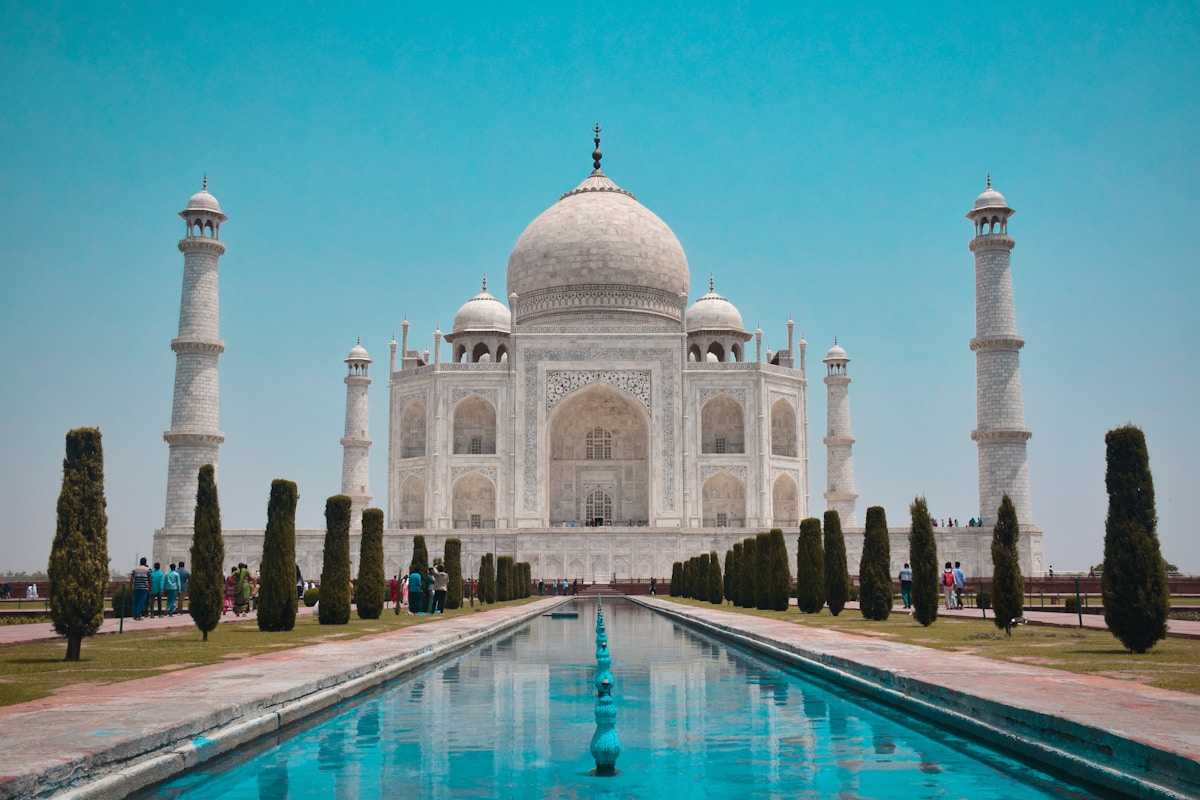
Taj Mahal · Yamuna Reflection Pool · Dawn
Five Monuments,
Five Centuries
Each one is a chapter in the longest love story ever told
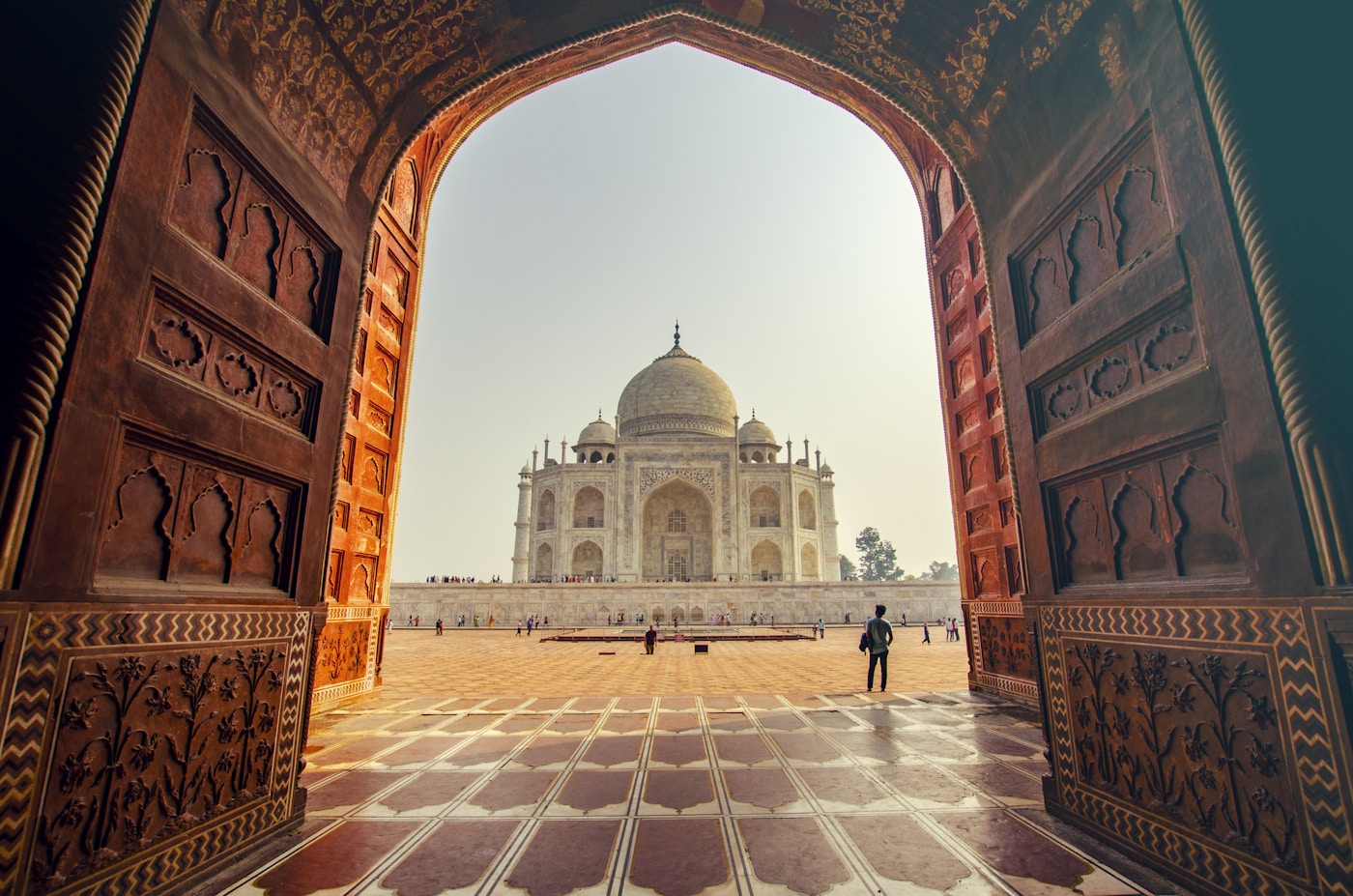
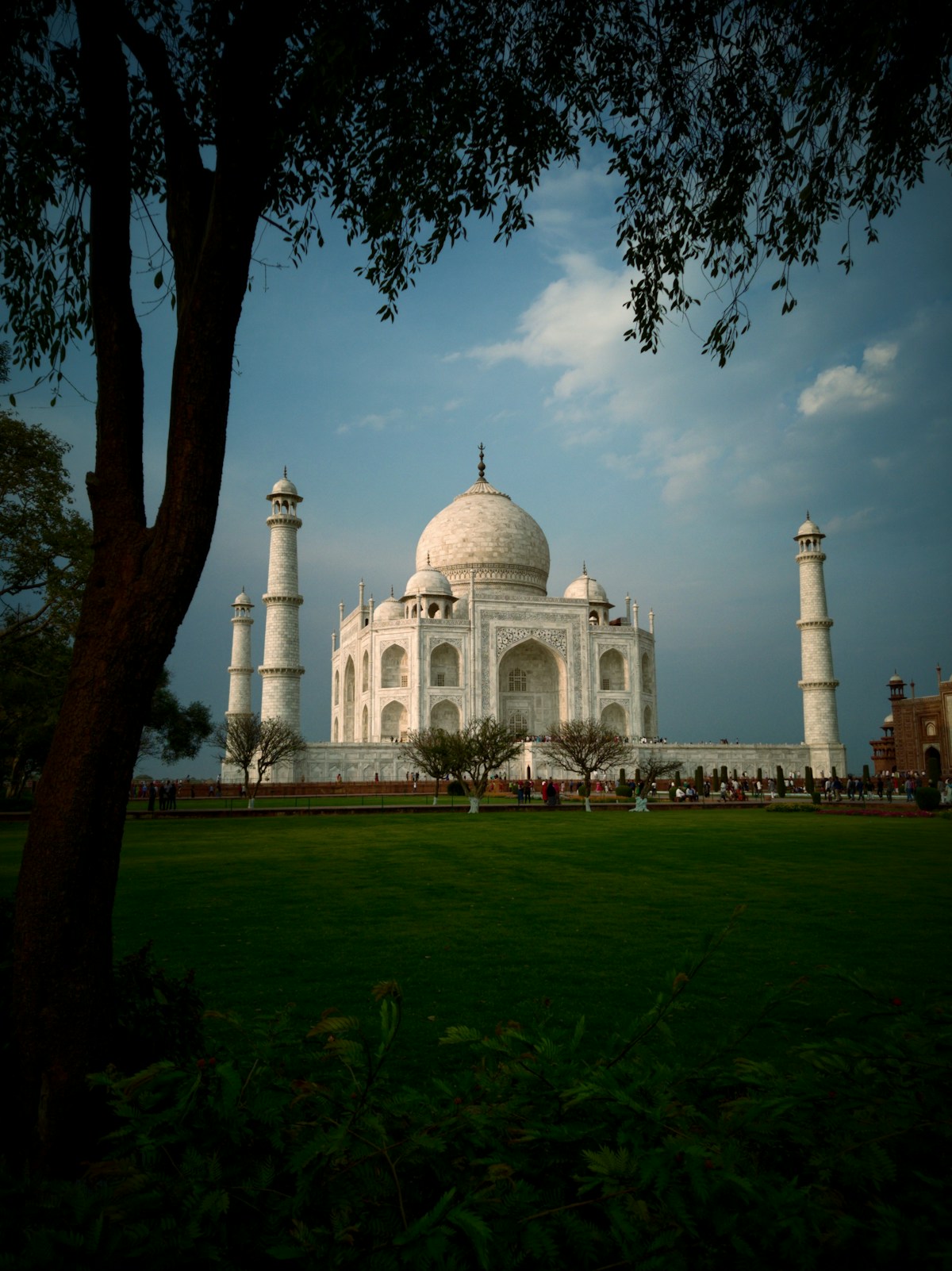



 Taj at Sunset
 Marble Inlay
 Fort Walls
 Mughal Gardens
 Street Life
 Artisan Craft
Five Hundred
Years of
Empire
From Lodi sultans
to Mughal emperors —
Agra was always
at the centre of it all.
A strategic ford on the Yamuna becomes a capital. The city rises from flat plains, chosen for its position between Delhi and the Deccan — the fulcrum of northern India.
After Panipat, Babur walks through Agra Fort and plants the first Mughal garden. The chahar bagh — four-part garden — becomes the design language of an empire.
After the death of Mumtaz Mahal, 20,000 artisans and 1,000 elephants are summoned. For 17 years, the Taj Mahal is built. Not as a tourist attraction. As grief made permanent.
The Taj Mahal is inscribed as one of humanity's most transcendent creations. Eight million visitors a year come and still find it astonishing. Some things survive judgment.



Agra's Hands
Still Make
Impossible Things
The same family workshops that supplied the Taj Mahal still operate today. Pietra dura — the ancient art of inlaying semi-precious stones into marble — is a skill passed from grandfather to grandchild. In Agra's lanes, you can watch it happen.
Curated Experiences
Three ways to meet Agra on its own terms
Before the crowds arrive, Taj Mahal belongs to you and the morning mist. A guided walk through Mughal geometry as the marble turns from grey to gold to blinding white.
The complete Agra story. From Akbar's red sandstone fortress to Jahangir's riverside gardens. Walk through four generations of an empire that changed the world.
Agra's soul lives in its lanes. Watch marble inlayers at work, taste petha at the original shop, and find heirlooms that will outlive you in the Kinari Bazaar.
The Taj Mahal
is not a photograph.
It's a presence.
Stand before it once and you will understand why an emperor spent 17 years, 20,000 lives, and an entire treasury to build it.
Book Agra TourExplore More